 prabs.xyz
15,200 Feet, Zero Network : How Gemma Helped Me Through Tawang
May 18, 2026
It has been 8 years since our Leh-Ladakh bike trip, and we were finally ready for another big adventure. This time, we chose Tawang, the “Himalayan Child.”
Over five days, we covered 600km of tough mountain roads, riding through Dirang, Sela Pass, Bum La, Zemithang, and Lumla. It was the ultimate test for us and our machines. The freezing wind and steep climbs challenged us at every turn. But through it all, our group stayed strong and enjoyed every bit of the mountain air.
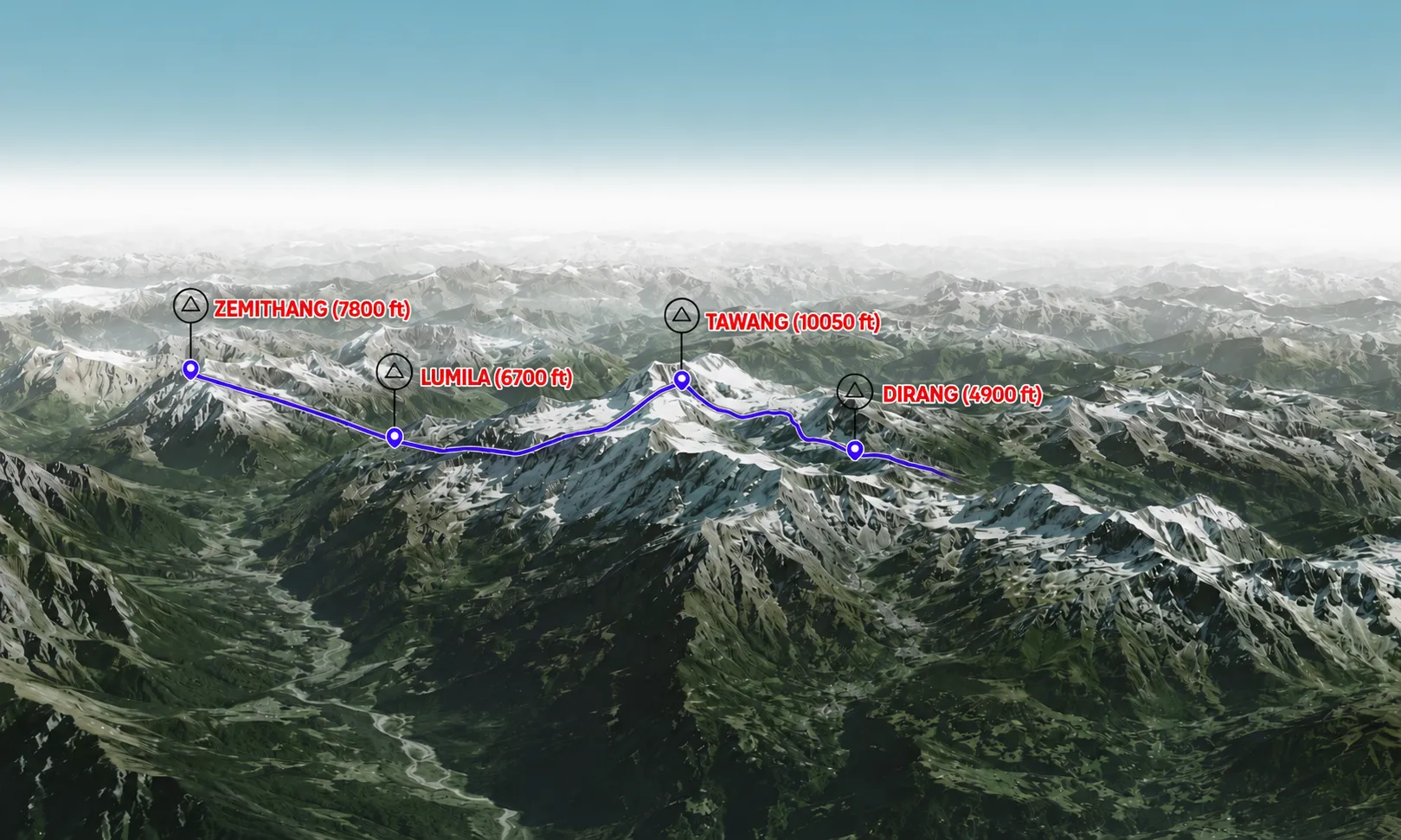
Tawang is a place where the air is thin, the history is deep, and the cellular signal is non-existent. When you’re standing at the edge of Bum La Pass or navigating the winding roads past Sela Tunnel, you can’t rely on your cloud AI due to network connectivity.
On my trip to the mountains, I decided to turn my iPhone 15 into a self-contained intelligence hub. No 5G, no Starlink, just local Apple silicon baby and Gemma 4.
The Setup: An Intelligence in My Pocket
Gemma is a family of lightweight, open models built by Google using the same research and technology as the Gemini models. It is designed specifically for developers to run on-device, meaning it can work directly on your phone or laptop.
Despite its smaller size, it provides high-quality intelligence for tasks like chatting, summarizing, and reasoning. Because it runs locally, it keeps your data private and works perfectly even without an internet connection.
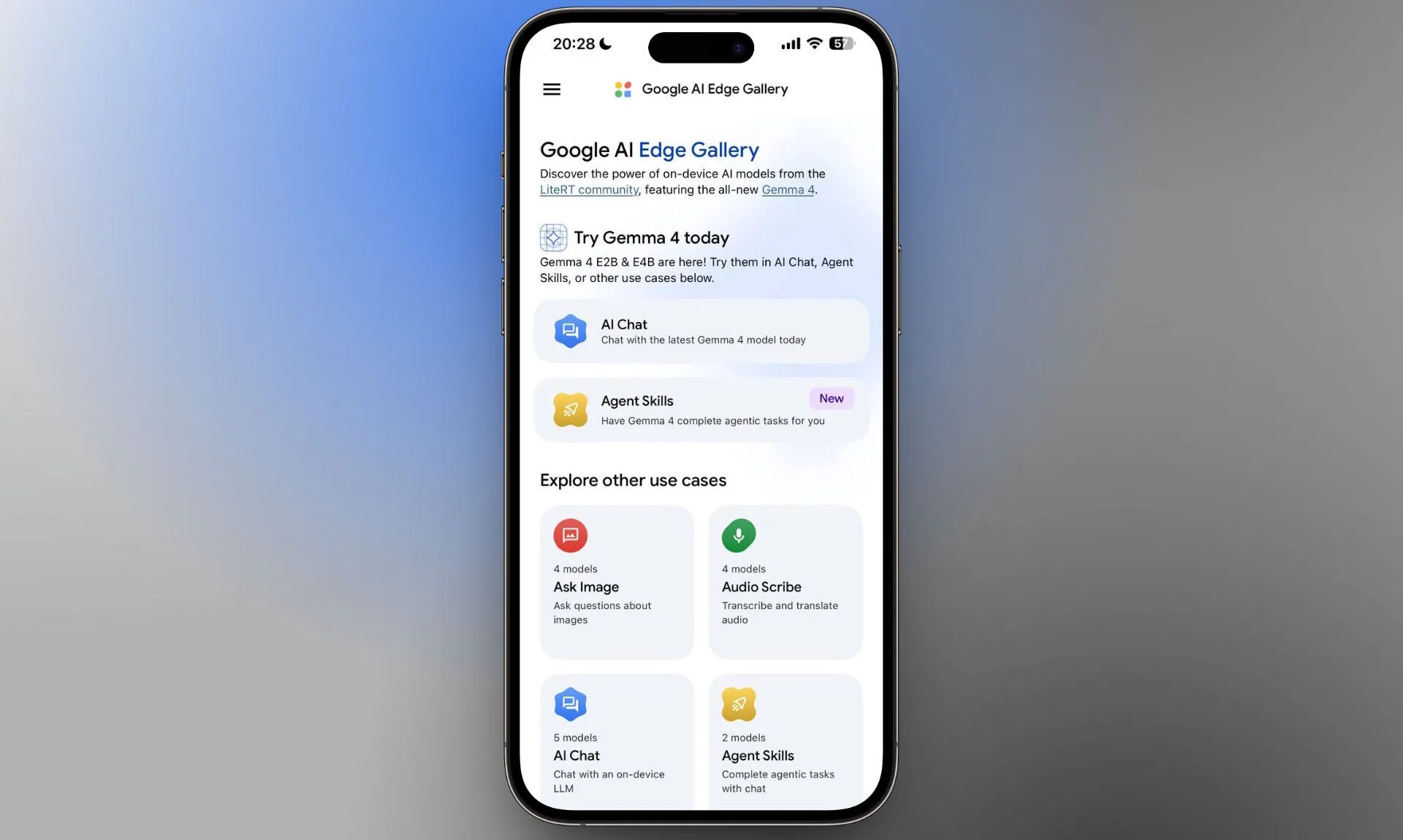
Before leaving the plains, I set up the Google AI Edge Gallery to run Gemma 4 locally.
The AI Edge Gallery app is the official mobile showcase for Google’s LiteRT (formerly TensorFlow Lite), the high-performance framework that runs AI directly on your iPhone. It is designed to run powerful models like Gemma 4 completely offline, ensuring that your data stays private and your interactions are lightning-fast without needing a server.
The app features tools like AI Chat with Thinking Mode, Ask Image for visual analysis, and Audio Scribe for real-time transcription, all powered by your phone’s hardware. By utilizing LiteRT, the app demonstrates how advanced generative AI can be a reliable companion even in the most remote “dead zones” of the Himalayas.
- The Model: Gemma 4 E2B -it (Compressed 4-bit quantization).
- The Hardware: iPhone 15 using the Apple Neural Engine.
- The Footprint: ~4GB of storage.
This app came through for me at the perfect moment, and the tech from the Google DeepMind team is honestly mind-blowing. These three Assists were the most powerful tools in my kit during the ride
Assist #1 : AI Chat (The Offline Travel Expert)
When you are riding toward the Indo-China border, you don’t just need a map alone, you need a strategy. As we prepped for the climb to Bum La Pass, we were well beyond the reach of any cell tower. I pulled over, kept my phone in Airplane Mode to save battery, and opened the chat.

Bum La is over 15,000 feet. The weather changes in minutes, the oxygen is thin, and the permits are specific. Usually, if you forgot to check the rules in town, you’d just have to wing it.
I asked Gemma 4: “What are the precautions I need to consider for Bumla Pass in Tawang?”
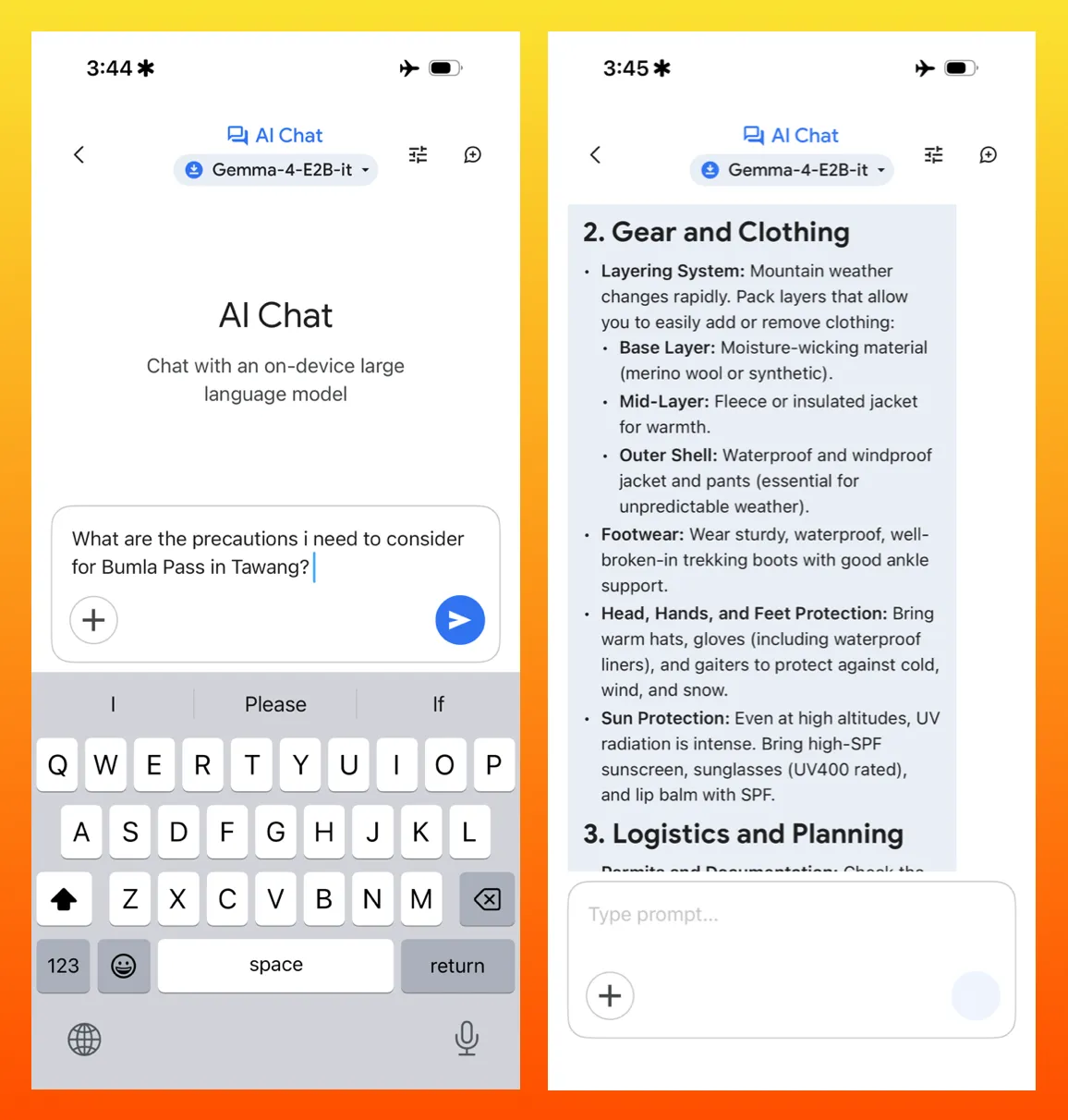
Without a single byte of data leaving the device, the model gave us a critical checklist:
- Permit Requirements: Reminding us about the Inner Line Permit (ILP) and the special permit from the DC office.
- Health Safety: Critical advice on acclimatization and recognizing altitude sickness.
- Weather Prep: A warning that even in “summer,” temperatures at the pass can drop below freezing instantly.
- Gear & Clothing: The necessity of windproof layers and waterproof gloves for the sudden mountain shifts.
- Logistics & Planning: A reminder about vehicle restrictions and the importance of full fuel reserves before leaving Tawang.
Assist #2: Ask Image ( The Unspoken story of Khinzemane)
On Day 3, we reached Khinzemane, a quiet, powerful spot just a stone’s throw from the India-China border. Standing by the rushing Nyamjang Chu river, the air felt different charged with history.
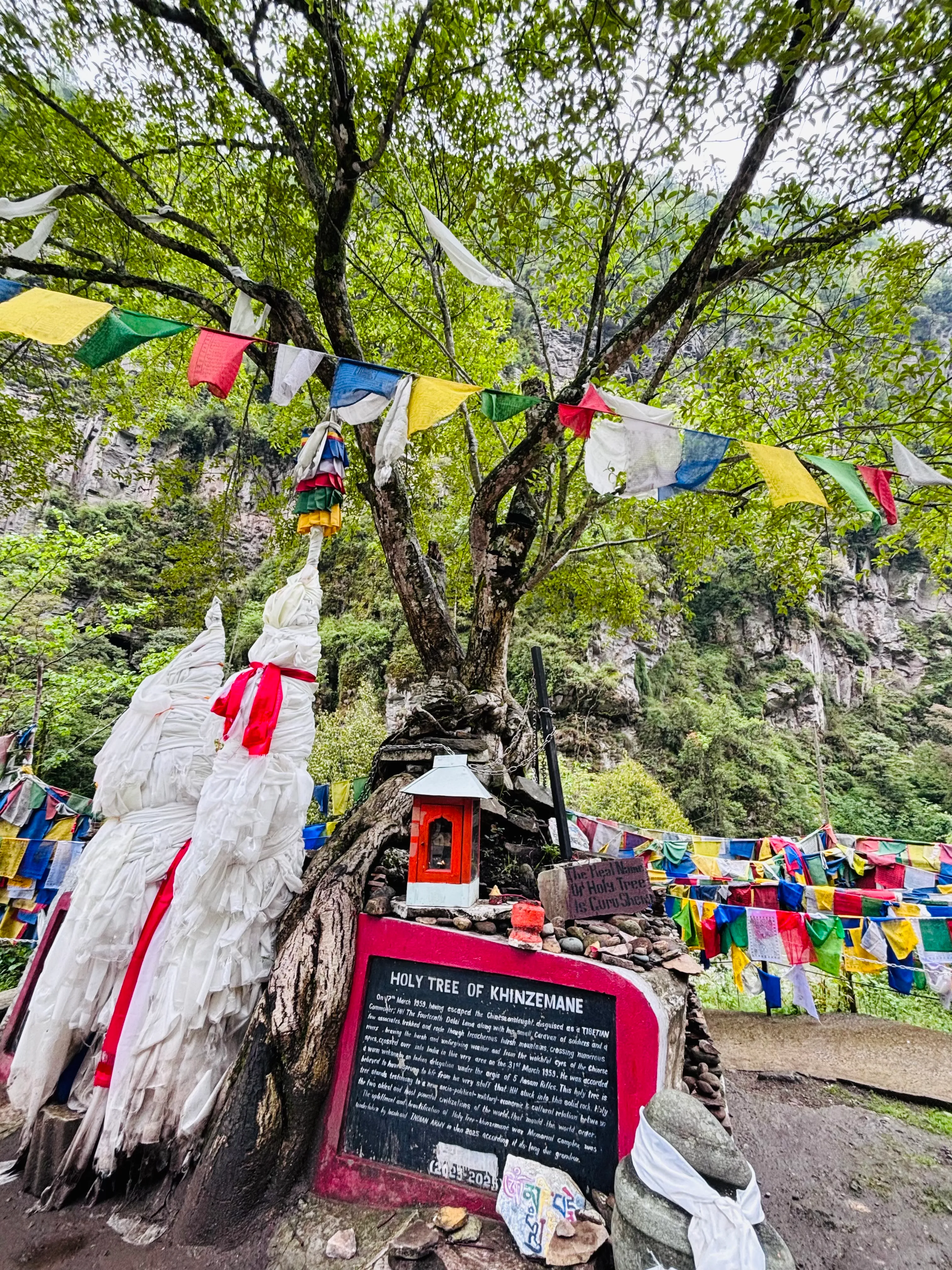
In 1959, when the 14th Dalai Lama escaped Tibet into India, Khinzemane was his very first footsteps on Indian soil. He dropped his wooden walking staff into the ground between the rocks. Miraculously, that staff took root, grew, and is now the giant “Holy Tree” standing there today.
It started pouring when I reached the holy tree. I couldn’t the read the tour guide nearby. Instead I took a photo of tour guide and asked about it.
Running entirely offline on the iPhone’s neural chip, the model performed a textual analysis of the image and surfaced the incredible details of the escape:
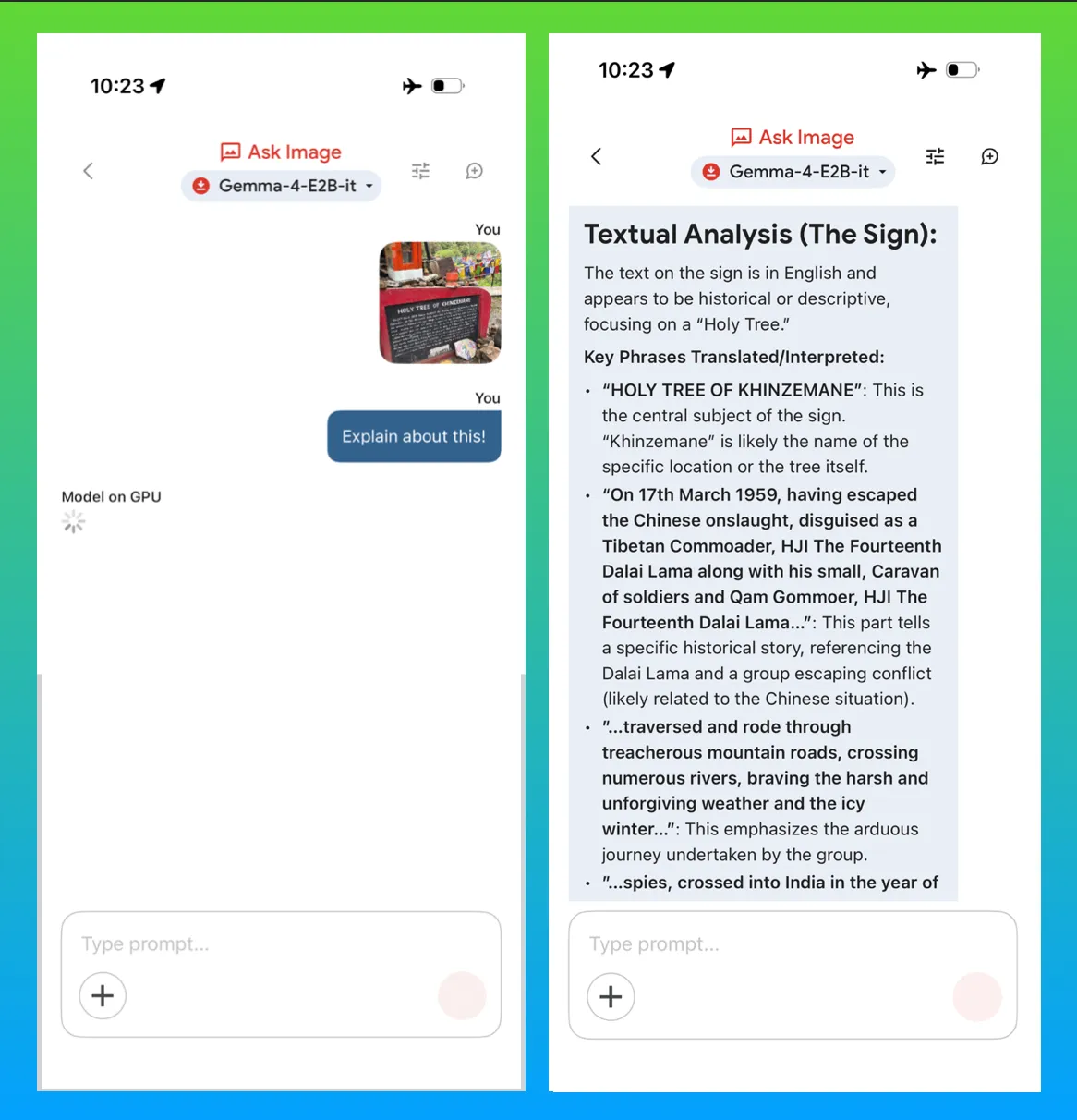
Standing there at the edge of the border, listening to the officer’s stories while my phone decoded the history from a rainy plaque in Airplane Mode, was a moment I won’t forget. It was a perfect bridge between a 65-year-old miracle and future technology.
Assist #3: Audio Transcribe (The Hero of Jaswant Garh)
On the final day of our trip, I experienced one of the most patriotic moments of my life. We reached the Jaswant Garh War Memorial near Sela Pass, where the temperature had plummeted to a biting 4°C.
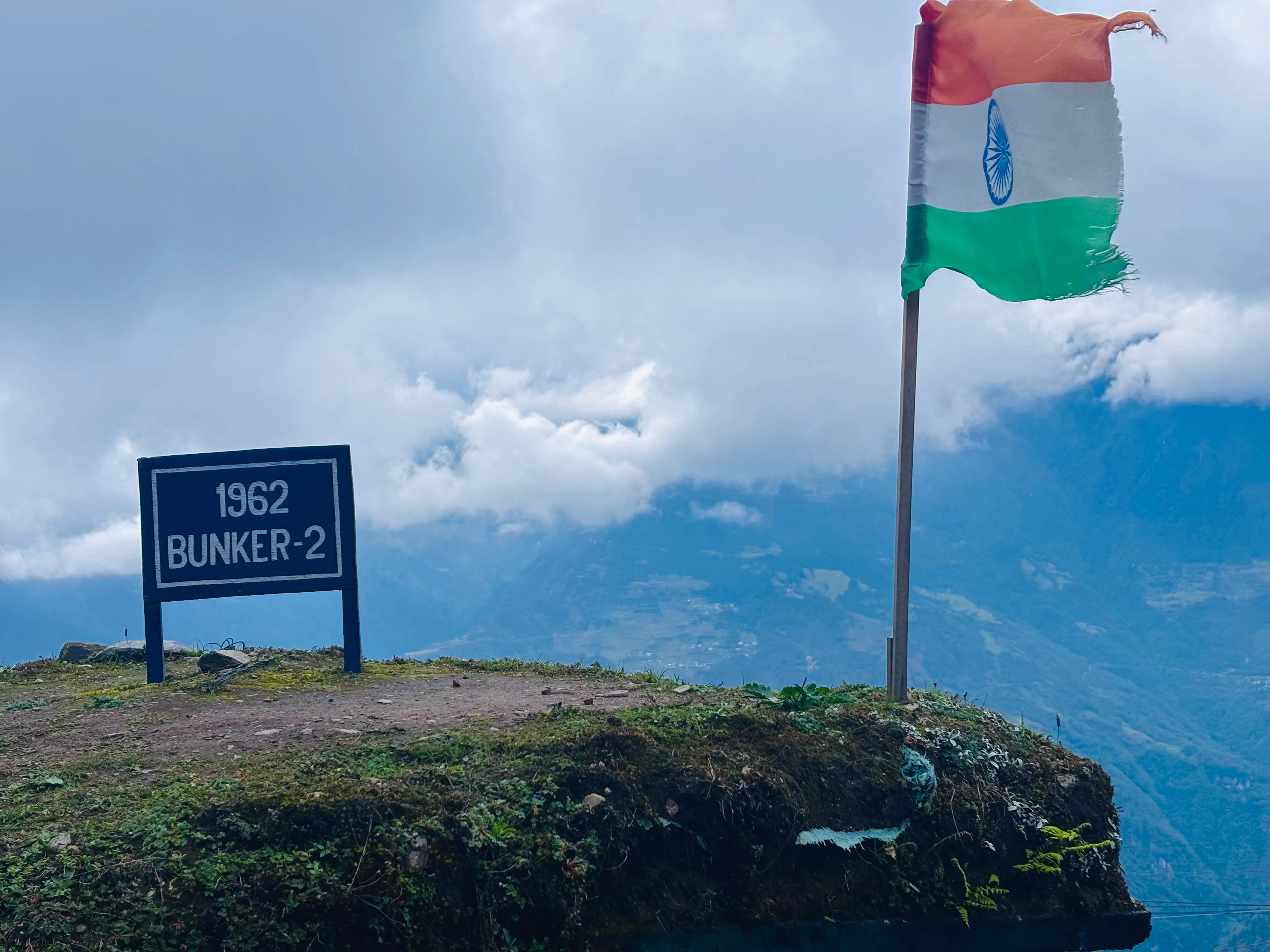
A soldier stationed there greeted us, and we asked him about the legacy of the legendary Rifleman Jaswant Singh Rawat. He began narrating the story with immense passion in Hindi. However, as our group isn’t fluent in the language, we were missing the nuances of his powerful words.
That is when I turned to my digital companion, Gemma 4. I used the Audio Scribe feature to record the soldier’s voice and asked the model to translate it into English.
Running entirely on the iPhone’s GPU in Airplane Mode, the response was immediate and incredibly accurate:
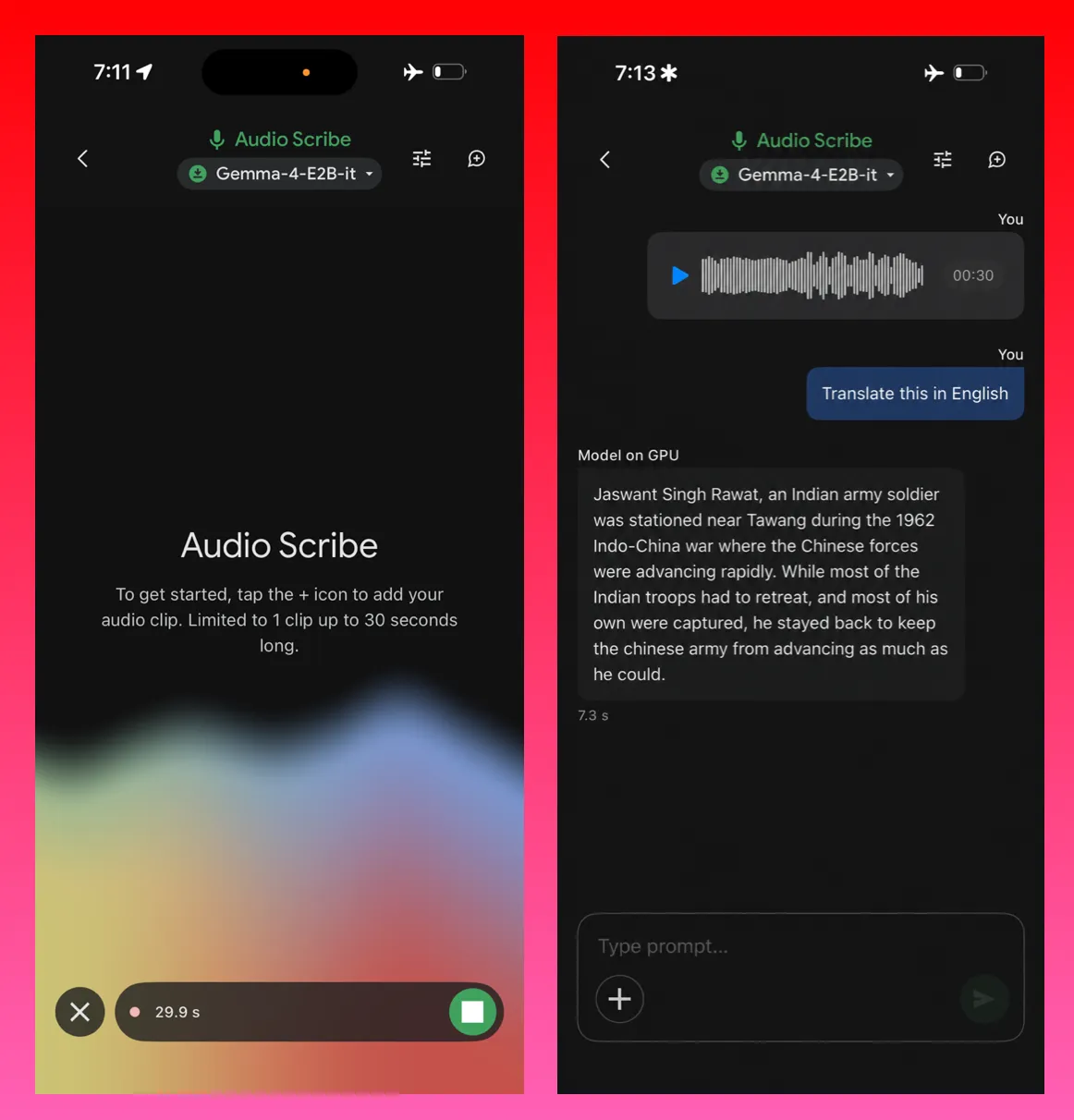
Gemma 4 Output: “Standing at the site of the Battle of Nuranang… Rifleman Jaswant Singh Rawat of the Garhwal Rifles held off an entire army for three days in 1962, single-handedly. To this day, he is considered a ‘living soldier’—he has his own room, a personal barber, and his uniform is ironed daily. The soil here still feels the weight of that bravery.”
For the first time, I truly felt how technology can transcend barriers. It wasn’t just about processing data; it was about connecting two different cultures and languages in the middle of a mountain chill. A pocket-sized machine helped us feel the heartbeat of a national hero’s story that might have otherwise been lost in translation.
The Performance Reality: AI at the Edge
Running a Large Language Model on a mobile device at 15,200 feet and sub-zero temperatures is the ultimate stress test for hardware. Here is the technical field report:
- Cold-Start Latency: There is a “Time to First Token” of about 8–10 seconds as the model weights load from NVMe storage into the 6GB LPDDR5 RAM. Once initialized, the KV cache management is efficient, and the generation flow is fluid at a comfortable reading pace.
- Neural Engine vs. Thermal Loads: The A16 Bionic’s 16-core Neural Engine handled the INT4 quantized model with impressive efficiency. While the device stayed warm—averaging a welcome 35°C in the Tawang chill—it remained well within its thermal envelope, avoiding the aggressive throttling often seen in sustained GPU-heavy tasks.
- Battery & Power Efficiency: Despite the sub-zero environment (which usually kills Li-ion performance), the on-device inference didn’t cause a massive voltage drop. LiteRT’s optimization ensured we could run multiple “Assists” throughout the day without reaching for a power bank.
- The Utility Shift: This transforms the iPhone from a simple “Communication Tool” into a Self-Contained Knowledge Engine. In a total network dead zone, your utility is no longer limited by your signal, but by your local compute.
Riding through Tawang reminded me that technology is at its best when it disappears into the background and simply helps us explore further. We didn’t go to the mountains to stare at our phones—we went to experience history and nature. But having an offline intelligence like Gemma 4 meant we could do so with more safety, more context, and zero bars of signal. The future of AI isn’t just in the cloud; it’s in our pockets, ready for the next 600km.
Have you explored on-device AI yet? Or are you still waiting for the cloud to catch up? I’d love to hear how you’d use an offline LLM on your next adventure. Let’s discuss in the comments!